Exodus 27:18
The courtyard shall be a hundred cubits long and fifty cubits wide, with curtains of finely twisted linen five cubits high, and with bronze bases. (NIV)
Today’s Reading: Exodus 27:9-19 and Revelation 19:1-10
The courtyard fence would surround the temple and sacrificial area where the alter was located typically referred to as the Outer Court. The north and south sides of the curtain fence would be 100 cubits long whereas the east and the west sides were 50 cubits long. The east side would be the only entrance to the tabernacle area.
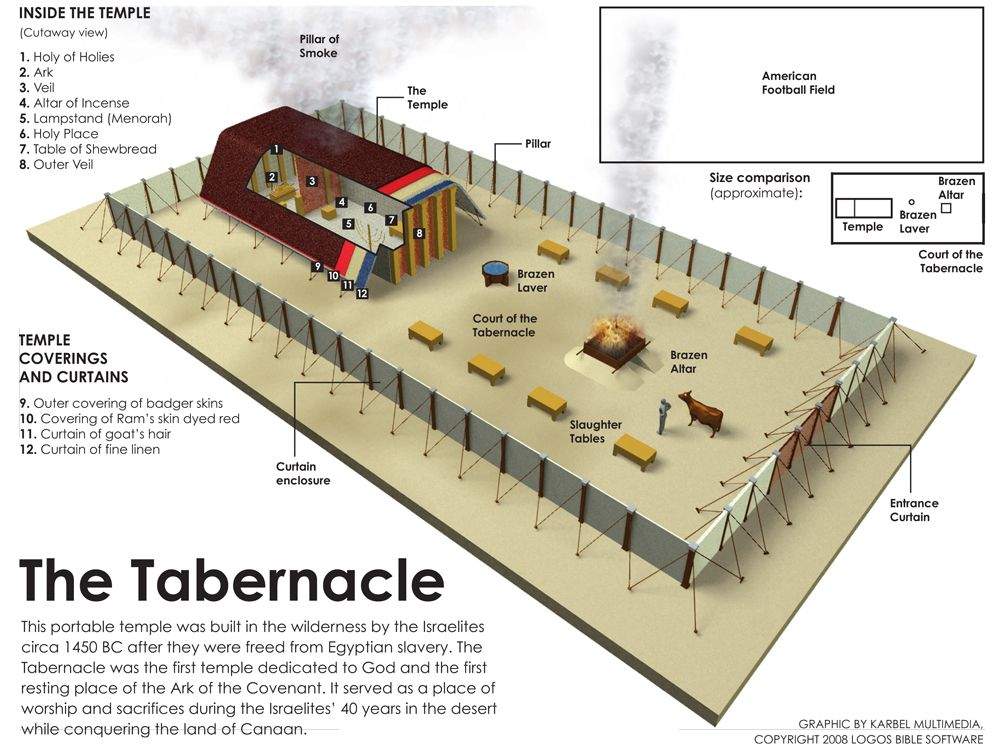
The curtain dimensions that make up the fence are full of numbers that we have studied in other parts of the tabernacle. So for today let’s focus on the material. All the curtains around the tabernacle are to be made of “finely twisted linen.” The Hebrew word used here for linen is šēš which was actually a fine white cloth made from linen.
Linen is made of flax. Flax was not commonly grown in the Palestine area. However, it was grown extensively in Egypt. Thus, this term refers to the brilliant white linen produced in Egypt that was likely taken by the Israelites as spoils during the Exodus.
This linen is used in the Old Testament in a variety of places for different purposes:
- Linen was prescribed for the priests to wear (Ex 28:39-41).
- Linen was worn by special, holy persons found in Ezekiel and Daniel
- Ezekiel saw a vision of a man clothed in linen who had a writing kit at his side (Ezk 9:2)
- Daniel saw a vision of a man dressed in linen, with a belt of fine gold from Uphaz around his waist (Dan 10:5).
- Fine linen was regarded as a precious gift from a man to the woman he loves. God spoke of Jerusalem as a husband to his wife saying, “I dressed you in fine linen and covered you with costly garments” (Ezk 16:10).
- The wife of noble character is described, “She makes coverings for her bed; she is clothed in fine linen and purple” (Prov 31:22).
Linen in the New Testament is also used in a few places:
- Jesus described the rich man in his parable saying, “There was a rich man who was dressed in purple and fine linen and lived in luxury every day” (Luke 16:19).
- Joseph of Arimathea wrapped Jesus’ body in “a clean linen cloth” (Matt 27:59).
- In John’s vision of the end times, the Bride of the Lamb is described dressed in “Fine linen, bright and clean, was given her to wear” (Rev 19:8).
- In the same chapter of Revelation, the armies of heaven are following Jesus “riding on white horses and dressed in fine linen, white and clean” (Rev 19:14).
So we see that linen is associated with purity and holiness as with it being prescribed as the appropriate dress for the priests and as we see holy beings wearing fine linen. Linen also symbolizes righteousness and divine favor as we see in Revelation where it tells us “Fine linen stands for the righteous acts of God’s holy people” (Rev 19:8).
But we know that our righteousness does not come from our good deeds. We are made righteous through the sacrifice of Jesus on the cross. “God made him who had no sin to be sin for us, so that in him we might become the righteousness of God” (2 Cor 5:21).
Interestingly enough, there is only one entrance into the courtyard of the tabernacle which is through the east gate. Likewise, there is only one way to the Father. Jesus said, “I am the way and the truth and the life. No one comes to the Father except through me” (John 14:6).
Jesus, our high priest, was wrapped in linen when he died so that we could be wrapped in linen of righteousness in eternity. In response, we should “pursue righteousness, godliness, faith, love, endurance and gentleness” (1 Tim 6:11).
 Christ in the Old Testament
Leave a comment